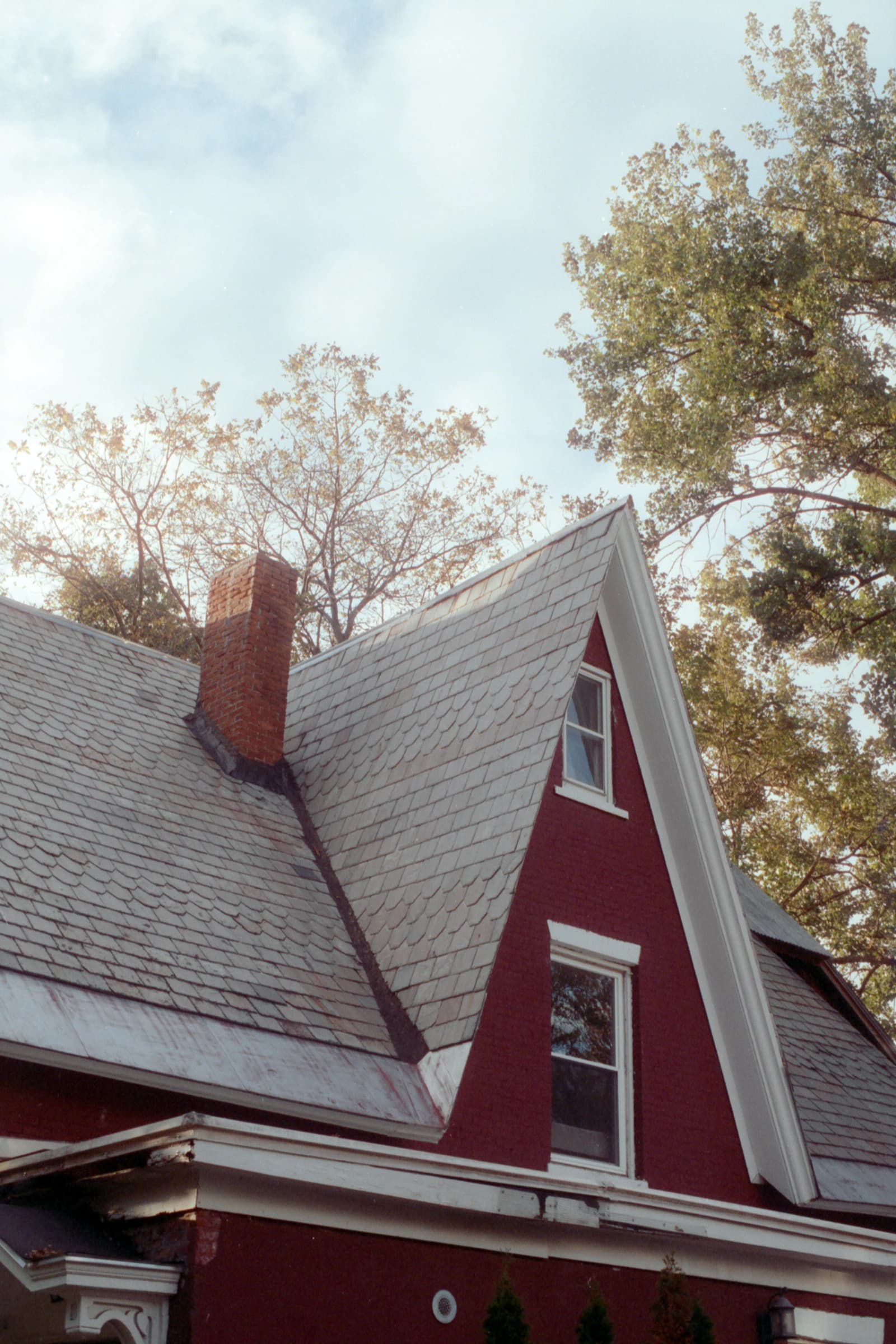
Glen Ridge’s Historic Preservation Commission publishes guidance for exterior work within the historic district. That makes address-specific preparation particularly useful before a roof’s visible details are changed. Technical roof condition and local review are separate questions, and both should be resolved in the appropriate way.
Record what is there before selecting a replacement
Photographs of the existing roof profile, eaves and prominent features help explain the proposed change. Identify the actual covering; an older house should not automatically be treated as an asphalt-shingle project. If its material is outside the confirmed service scope, seek an appropriate specialist. The roof assessment should identify that boundary clearly.
Preserve a clear distinction between repair and redesign
A chimney-flashing repair can be a different undertaking from changing the roof covering or edge profile. Ask what must be opened to integrate waterproofing and which visible elements would change. Repeated sealant patches can make the original detail difficult to read. A proposal should explain the repair method rather than simply describe it as restoration.
Coordinate review before committing to materials
Consult Glen Ridge’s official Historic Preservation Commission information for the property’s status and the proposed exterior work. This site does not claim preservation credentials or determine approval requirements. Once any applicable review is understood, compare proposals on decking, flashing, ventilation and cleanup as well as appearance. Keep the resulting records for future maintenance.
Local reference: The borough’s commission provides historic-district exterior-work guidance. Official local resource ↗
Roofing observations above are property-specific guidance, not findings about every building in Glen Ridge.