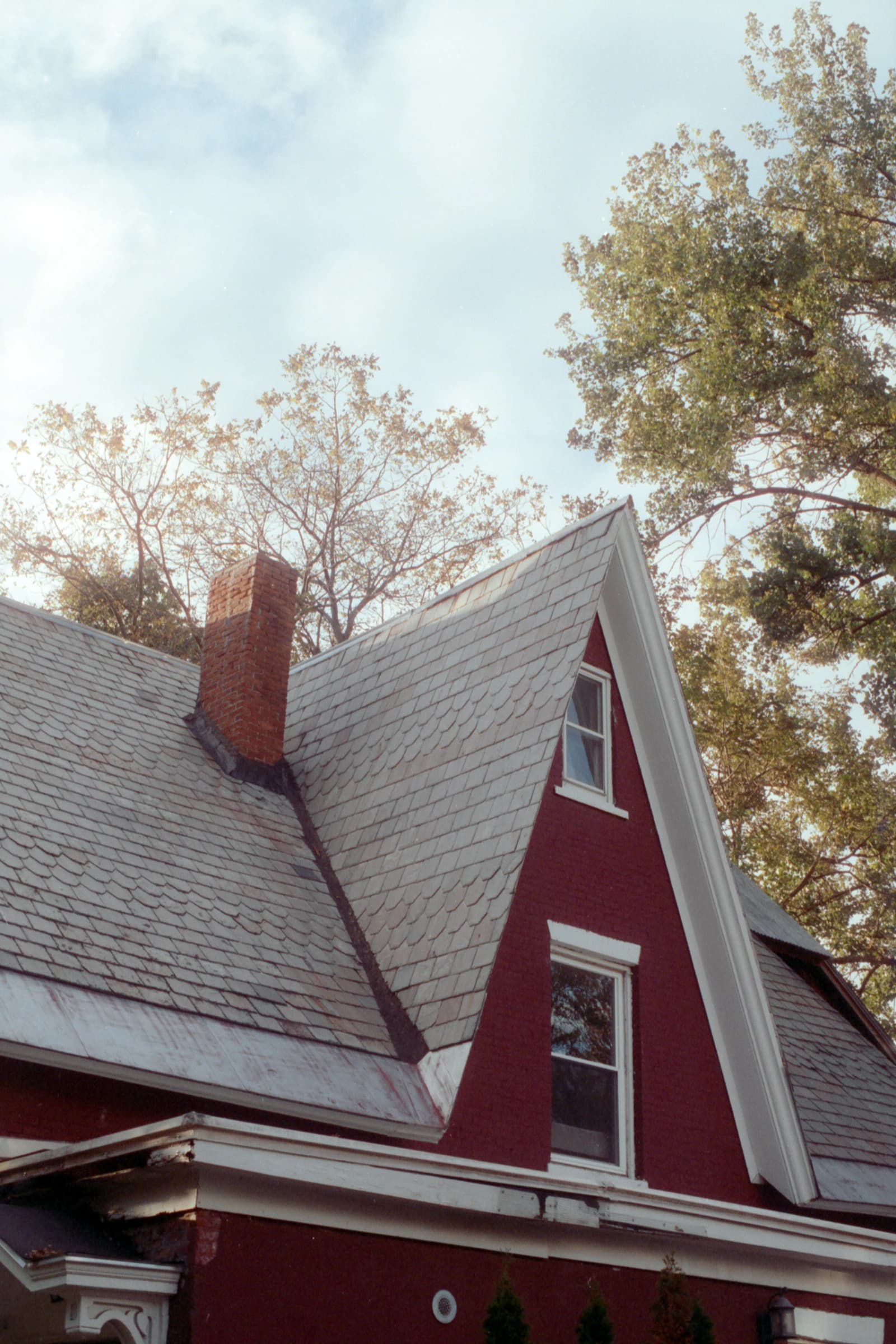
A stain on a ceiling tells you where water arrived—not necessarily where it entered. On an Essex property with a chimney, dormer or later addition, the path can cross several roof details. A useful repair starts by tracing that path and checking the surrounding materials, rather than covering the visible symptom with sealant.
A repair should answer why the roof leaked
Tell us whether water appears during steady rain, wind-driven rain or after snow melts. A professional assessment can compare the exterior roof with accessible interior evidence. Failed chimney counterflashing, a split plumbing-vent boot and a damaged valley need different repairs. Repeated patches can obscure the original entry point, so photographs and previous repair records are useful. Do not climb onto a wet roof to collect them.
Matching the repair to the roof system
An isolated missing shingle may be repairable when adjacent shingles remain flexible and sound. If they crack during lifting, a larger area may need attention. On low-slope additions, seams and membrane-to-wall transitions need a compatible repair method. Asphalt cement is not a universal solution for every membrane. Ask what materials will be used, how the repair ties into existing waterproofing and which nearby conditions are outside the repair scope.
Chimneys, valleys and changes in roof pitch
Older homes in communities such as Montclair and Maplewood can have roof sections built at different times. The junction between a porch and a main roof deserves particular attention. Water collected by a valley moves across a concentrated path; an exposed fastener or damaged flashing there may matter more than a small defect on an open slope. Roofing and masonry problems can overlap, and the assessment should distinguish them.
When a small repair is no longer a durable choice
Widespread brittle shingles, multiple recurring leaks or extensive wet decking may make another patch poor value. A repair proposal should describe the area being addressed, any concealed conditions that cannot be confirmed yet and the signs that would change the recommendation. Compare that limited scope with a replacement assessment before deciding. A repair does not reset the service life of the rest of the roof.
What changes the size of a repair?
The opening that lets water in may be small, while the area that must be opened to repair it correctly is larger. A wall flashing connection can extend behind siding. A chimney detail may require adjoining shingles to be lifted. A membrane repair needs enough sound surrounding material for a compatible connection. Ask the assessor to explain this access area separately from the damaged area. Also ask whether the proposal includes replacing wet or unsound material discovered beneath the covering. A lower price can reflect a narrower scope rather than a better solution. Compare which layers are addressed, how the new work joins the old and what remains unresolved before deciding between proposals.
Document what a successful repair should achieve
Describe the symptom in the written scope: for example, rain-related entry at the rear bedroom near a roof-to-wall junction. Keep dated interior photographs and note whether the stain grows after subsequent rain. Existing staining will not disappear merely because the entry path is repaired, and drying or interior restoration may require separate attention. Agree how questions about the completed work will be handled and retain the actual terms provided with the job. If water reappears, report the timing and location without assuming the new repair or a different roof area is responsible. That record supports a focused follow-up instead of another round of disconnected patches.