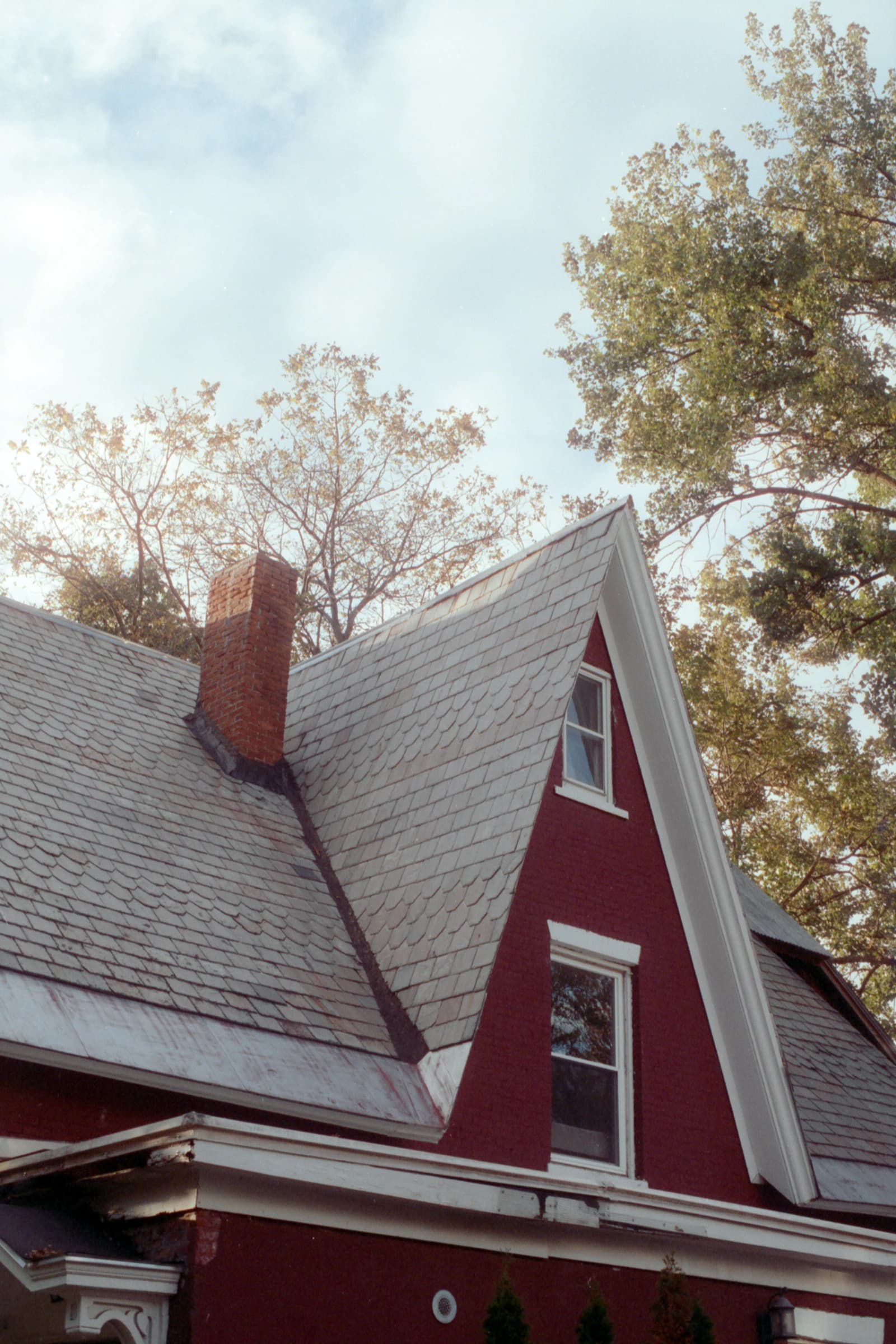
Shingles shed water as part of an overlapping assembly. Their performance depends on the deck, underlayment, edge details and flashing beneath and around them. On an Essex home with several valleys or dormers, those connections deserve as much attention as the broad roof slopes.
Read the pattern of wear
One damaged tab, widespread curling and a recurring leak at a valley are different findings. Granules in a gutter alone do not establish that a roof needs replacement. Consider the surface condition, age information and leak history together. Shingles that are too brittle to lift may limit localized repair options.
The edges finish the system
Starter courses, drip edges and ridge caps each serve a purpose. Their installation should follow the applicable system requirements. At walls and chimneys, flashing directs water back onto the roof surface. A replacement estimate should identify these details rather than allowing the shingle brand to stand in for a complete scope.
Choose appearance after suitability
Color, profile and visual scale affect how the roof sits on a brick, stucco or sided home. Compare samples in outdoor light, but first confirm that the product is suitable for the pitch and assembly. Ask for product information and actual warranty terms. The website does not claim manufacturer credentials or offer a blanket lifespan promise.
Make maintenance observations useful
From the ground, record displaced ridge caps, missing shingles and debris accumulating in valleys. Keep gutters functioning and arrange a safe inspection when there are signs of damage. Avoid pressure washing or improvised roof treatments without product-specific guidance. Walking the roof can itself cause damage and presents a fall risk.
Ask what happens at valleys and wall junctions
A shingle proposal should explain more than the product on the open slopes. Valleys gather runoff from adjoining planes, while wall junctions and chimneys interrupt the overlapping pattern. Confirm whether existing flashing will remain, be repaired or be replaced, and how that decision was made. If siding must be disturbed to reach a connection, identify restoration in the scope. Ask which lower-pitched sections need a different covering or installation detail. These questions are especially useful for homes with later additions, where matching shingle appearance can conceal differences in the roof assembly beneath it.
Use samples and product documents together
Review a physical sample in daylight when possible and consider how it relates to siding, brick and trim. Then look at the specified product documents and the complete estimate. Clarify which accessories form part of the proposed system and what the actual written terms cover. If a matching repair product is unavailable, discuss the visual boundary and material compatibility before authorizing work. A color choice does not establish installation quality, and a product label does not establish the condition of the underlying deck. Keep the final product identification with your property records so a later repair can begin with something more reliable than a photograph.