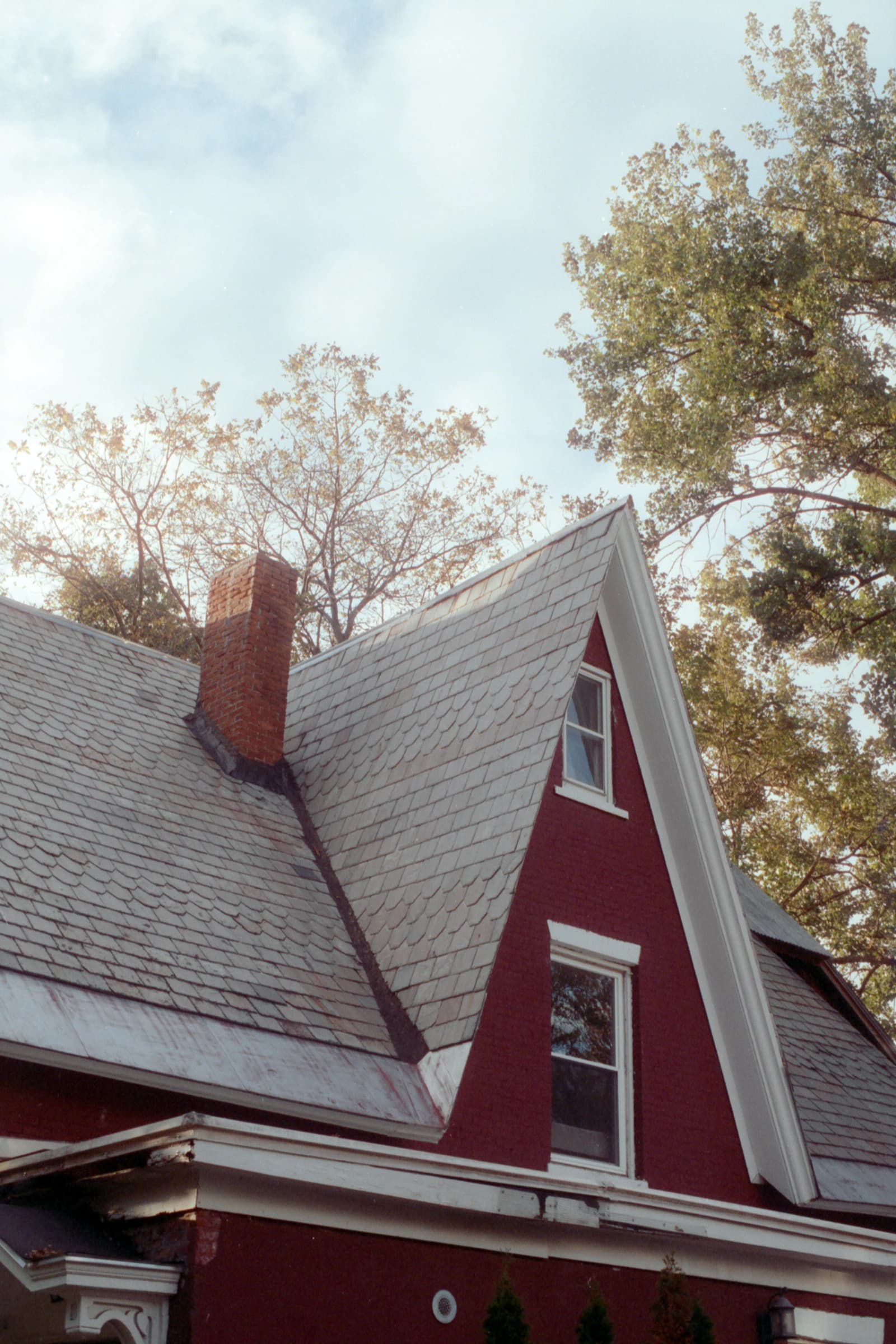
An older home may contain a newer roof, older flashing and an addition built decades after the original walls. That mixed history makes a ceiling stain difficult to interpret. In communities with documented older buildings, such as Montclair and Glen Ridge, start by separating the house’s age from the age and condition of each roof component.
Build a timeline of the symptom
Write down when the leak began and which weather conditions bring it back. A problem after wind-driven rain may point toward a wall or flashing junction; winter moisture can require a broader investigation of ventilation and indoor air leakage. These are clues, not remote diagnoses. Include previous repairs and whether they changed the symptom temporarily or permanently.
Look at interruptions in the roof surface
Dormer walls, chimney bases, pipe boots and skylights interrupt the covering. Their flashing must direct water back onto the intended drainage surface. A repair that merely covers the visible edge with sealant may leave an underlying connection unresolved. Ask the inspection to explain the path water could take and what evidence supports that explanation.
Treat the addition as a separate assembly
A low-slope rear roof may use a membrane while the main house uses shingles or a different covering. Its junction at the house wall can be difficult to see. Upper roof runoff may also concentrate on that lower surface. The inspection should include the connected systems and identify whether both are part of the proposed repair.
Do not let age decide the answer by itself
A localized defect can exist on an otherwise serviceable roof. Conversely, repeated leaks and brittle adjoining material can make another small repair impractical. Ask for the observed condition, the limitations of the inspection and the expected scope of each option. If designation or specialist materials are involved, confirm the relevant qualifications and local review separately.
Technical background: Manufacturer educational resource ↗. This reference does not imply affiliation, certification or warranty eligibility.