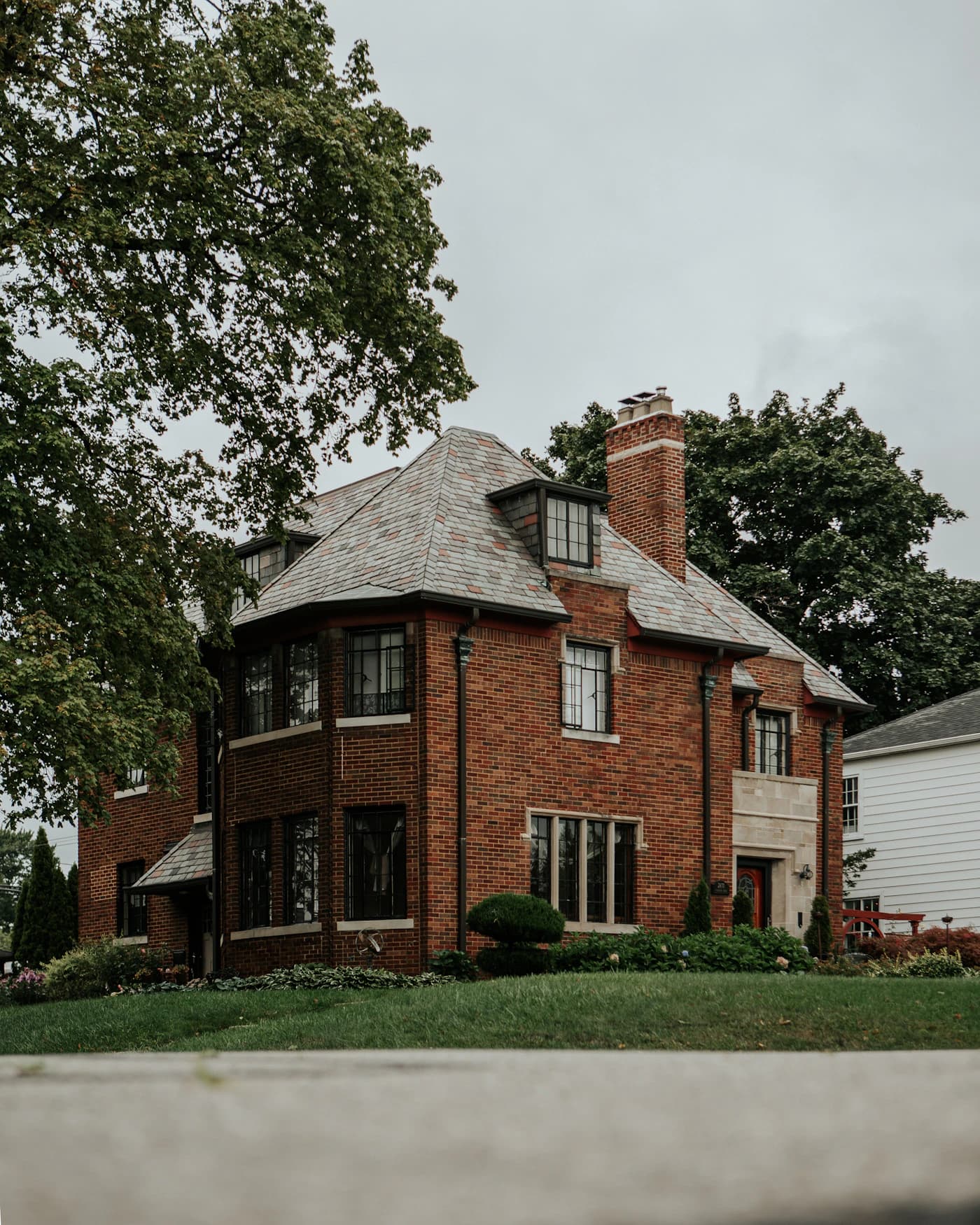
For a Cedar Grove home, a useful starting point is the route water takes from the roof to the ground. The township has its own municipal construction and planning resources. Your roof’s pitch, nearby branches and gutter arrangement still need to be evaluated at the property; a town name cannot establish those conditions.
Follow debris from the valley to the outlet
On a property with nearby trees, leaves may collect in a valley before moving to a gutter. A blocked outlet can cause overflow even when the roof covering remains sound. Record where overflow appears from a safe ground position. An assessment should inspect the roof edge and fascia as well as the visible blockage, especially where staining has continued for some time.
Separate branch impact from ordinary wear
After strong weather, a branch can leave a puncture or damage a small area of shingles. Wind may disturb ridge caps or flashing elsewhere. Document the timing and avoid removing heavy debris yourself. An inspection should identify the observed damage and assess the surrounding material’s ability to accept a repair. Storm timing alone is not evidence that all deterioration came from that event.
Use replacement planning to resolve recurring details
If the roof has repeated leaks at the same valley or wall, a replacement is an opportunity to review the detail rather than reproduce it. Ask about the deck, underlayment, flashing and ventilation. Discuss delivery and debris access around the house, and distinguish gutter work from site-drainage work that may fall outside the roofing proposal.
Local reference: Cedar Grove Township is the municipal source for property-specific local questions. Official local resource ↗
Roofing observations above are property-specific guidance, not findings about every building in Cedar Grove.