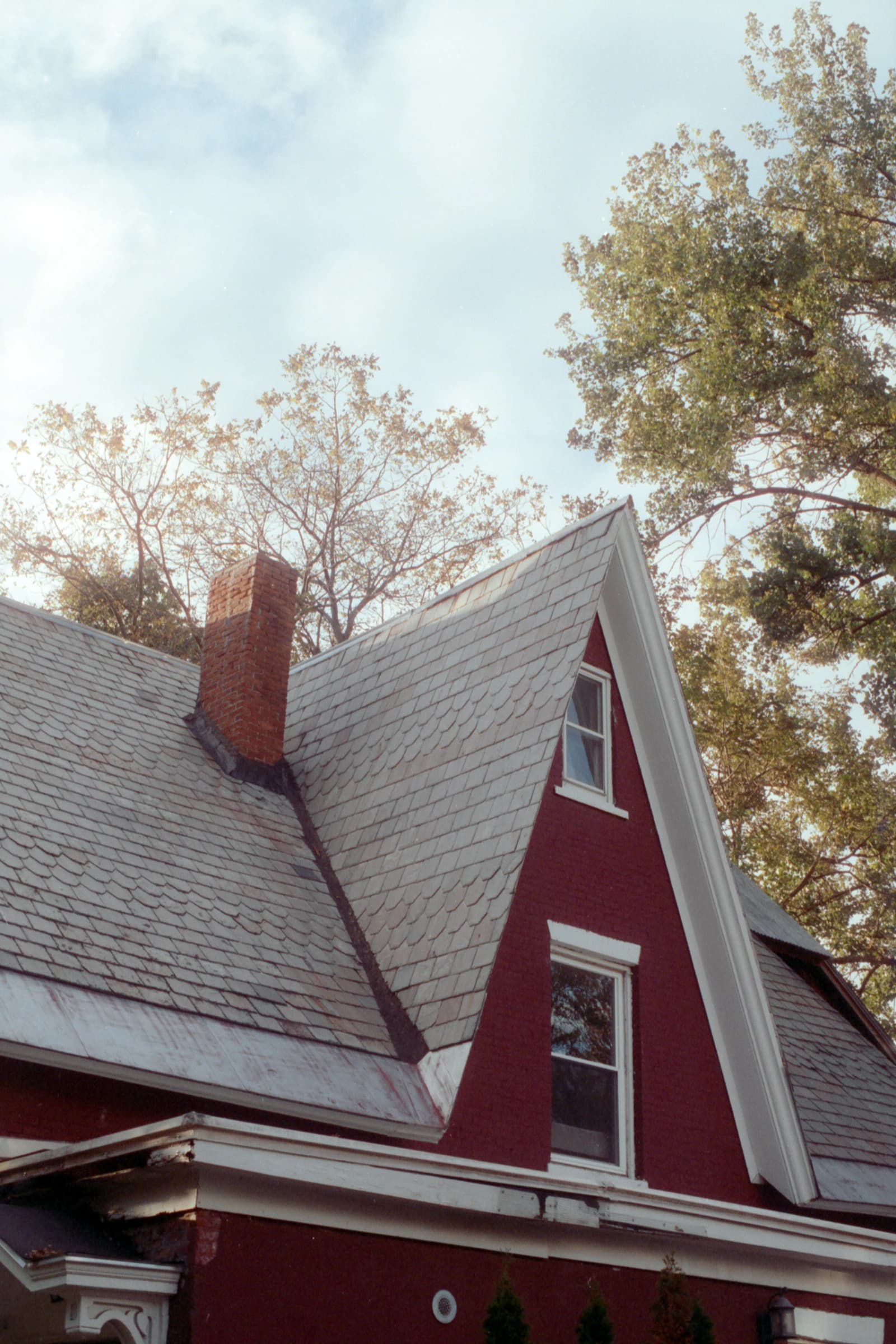
A Belleville roofing inquiry is most useful when it identifies the part of the building involved. A main pitched roof, porch covering and rear extension may have different materials and installation histories. The township publishes its own master-plan and community-development information; property questions should be tied to Belleville rather than a neighboring municipality or a similarly named city outside New Jersey.
Start with the rooms beneath the leak
If water appears above a stairwell or rear room, describe that location and the weather when it happens. A leak can follow a wall or framing member from another roof area. An assessment should compare the affected interior with chimney flashing, plumbing vents and any nearby change in roof pitch. Photos from the ground and a record of previous work are more useful than a guess about the material that failed.
Give the porch and addition a separate scope
A lower roof receives water differently from the main slope. If it is low-pitched, confirm that its covering is appropriate and that the wall junction can be repaired reliably. On an occupied multi-unit property, arrange permission to inspect the relevant rooms and identify who can authorize work. Do not assume that replacing the largest roof section will solve a smaller transition leak.
Plan the job around available access
Before a repair or replacement, discuss where materials can be delivered and how entrances will remain usable. Ask whether gutter or fascia work is part of the estimate. Where an older covering cannot be repaired without damaging surrounding material, compare a wider repair with replacement. Keep the township name and property address accurate when requesting project-specific municipal guidance.
Local reference: Belleville maintains its own planning and community-development resources. Official local resource ↗
Roofing observations above are property-specific guidance, not findings about every building in Belleville.